




















The Shift from String Matching to Named Entity Resolution
Traditional SEO relied on textual keyword density and lexical frequency heuristics. Modern search engines have transformed into semantic reasoning engines powered by entity-attribute-relationship triples.
For over two decades, search engine indexing operated primarily on the Vector Space Model and inverted indexes. Documents were tokenized, stemmed, and evaluated using probabilistic statistical models such as BM25. While highly performant, this approach lacked conceptual awareness: a document mentioning 'Apple' could refer to the agricultural fruit, the multinational technology corporation, or a record label.
Google's introduction of the Knowledge Graph in 2012 marked the fundamental paradigm shift from 'strings to things'. By utilizing Schema.org as the shared lingua franca across Google, Microsoft Bing, Yahoo, and Yandex, search engines construct multi-dimensional knowledge graphs where nodes represent unambiguous entities and edges represent verified semantic relationships.
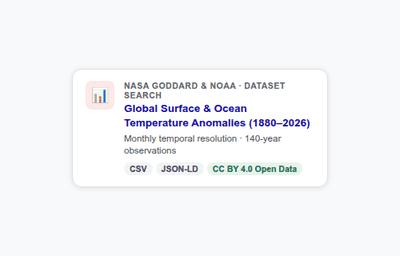
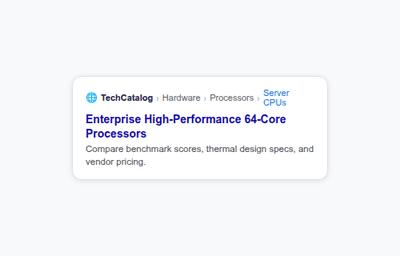
When search engineers deploy Schema.org structured data, they provide a direct, machine-readable declaration of reality. Rather than forcing search engine natural language processing (NLP) algorithms to guess whether a page describes an e-commerce product or an editorial commentary, structured JSON-LD explicitly asserts '@type': 'Product' with precise offer prices, stock states, and manufacturer credentials.
- Lexical keyword density is subservient to explicit entity disambiguation in modern semantic indexing.
- Schema.org acts as a universal schema translation layer across all major commercial search crawlers.
- Explicitly declared types eliminate algorithmic ambiguity and guarantee exact categorization.